
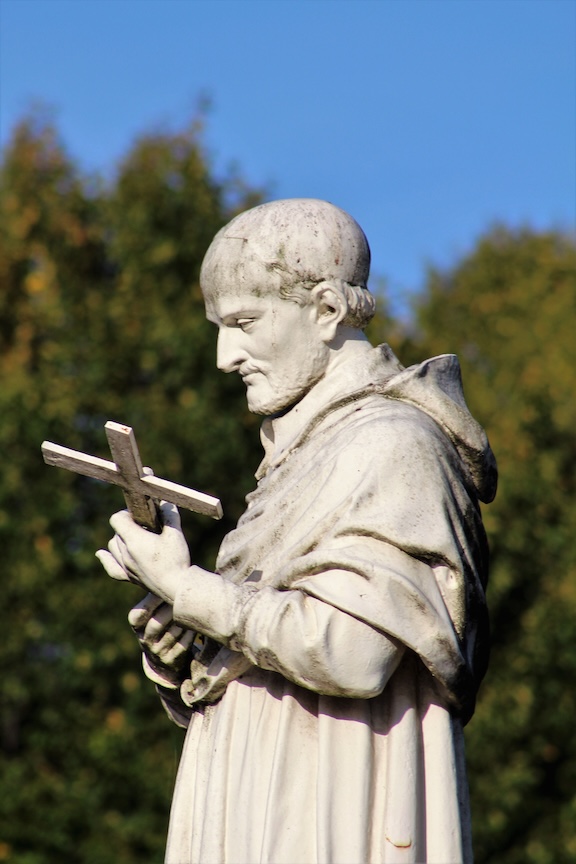
 My father went to a Jesuit school on Galveston Island in the 1920s. More than once he told me the story of the day he raised his hand and asked his teacher a question about God. He was called to the front of the class and struck across the palm with a ruler. The next day he raised his hand and asked another question, and again he was called up and struck. On the third day, when his hand went up, the teacher didn’t even wait for the question — just crooked one finger, summoning him forward to be punished.
After two weeks of this, my father said, he no longer knew whether God existed or not. “But,” he would finish, eyes bright, “I knew that priest did not know either.”
He pointed to that moment as the beginning of a lifelong passion for science.
One of his favorite subjects was how improbable the universe is — how it hangs together on impossibly fine balances, starting with the tug-of-war between nuclear forces that makes an atom possible at all. One afternoon he took an ice cube from the freezer and dropped it into a glass of water. It bobbed on the surface. He handed me the glass and asked why the ice floats.
Almost everything else in the world contracts as it cools and grows denser as it freezes. Water does the opposite. It swells. Ice is lighter than the water it came from. When I admitted I had no idea why, he told me — with obvious delight — that no one knew. It was one of the great open questions of science, and one of the most important.
Why important? Because if ice sank, he explained, it would settle to the bottom of the ocean, where the cold and dark would keep it from ever melting. Winter after winter, ice would pile up from the seafloor. The lakes and rivers would fill from the bottom. Eventually the oceans would become solid ice, and a thin summer skin might thaw on top only to freeze again each fall. Life, most likely, would never have started. We are here because ice floats.
That conversation was more than fifty years ago. And here is the part he would have loved: science has finally begun to answer his question — and the answer is far stranger than anyone guessed.
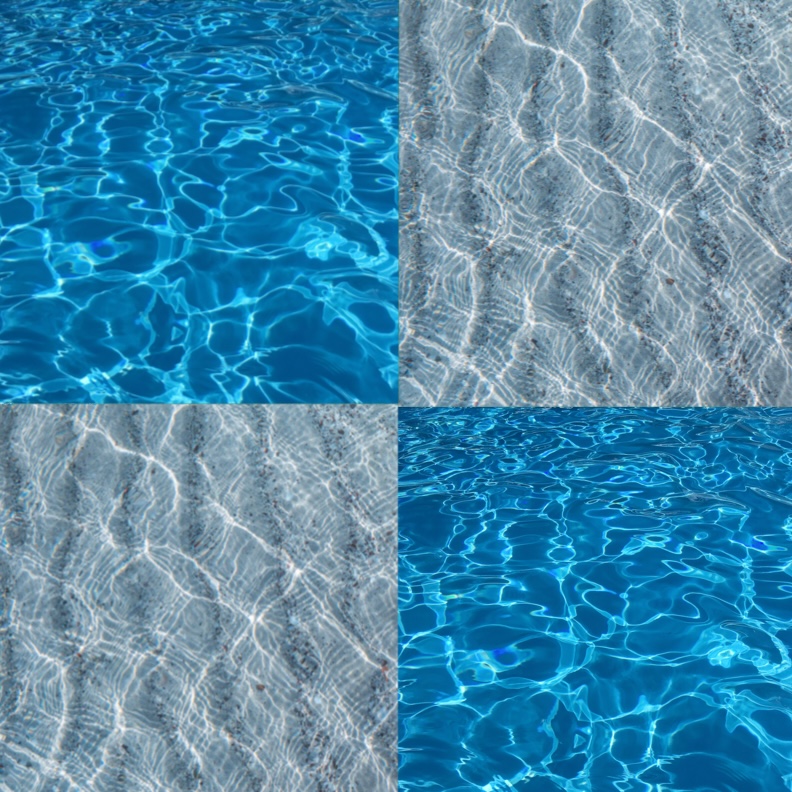
Water, it turns out, may not be one liquid at all.
For most of my life the picture was simple: solid, liquid, gas. Water is water. But water has always been a troublemaker, failing to behave as physics predicts. It stores enormous amounts of heat, which is why oceans steady our climate and why a body of water takes so long to warm on a summer day. It clings to itself with a surface tension strong enough to hold up an insect. It reaches its densest point not at freezing but at a chilly 4°C — and then, perversely, expands again as it cools further toward ice. It behaves unlike any other fluid.
Now it looks as though science is on the verge of solving the mystery. A new theory is rapidly gaining followers as more evidence mounts: that water has a kind of split personality — that hidden inside ordinary water are two different kinds of liquid, constantly trading places. One is dense and disordered, its molecules jostling close together. The other is open and roomy, its molecules spaced out in an elegant, tetrahedral lattice — a loose rough draft of ice itself.
At everyday temperatures, water is a shimmering blend of the two arrangements, groups of molecules flickering between them moment by moment. As water cools, it does at first what all liquids do: its molecules slow down, jostle less, and settle closer together, so the water grows steadily denser. But cooling also coaxes more molecules into the open, ice-like arrangement — and that arrangement takes up more room. For a while, the ordinary squeezing wins. Then, at 4°C, the two effects balance. Below that point, the spread of the open structure overwhelms the shrinking, and the water begins to swell instead. That is the secret. That is why density peaks at 4°C and then reverses. Ice is simply water that has fully committed to the open structure — and so the solid ends up lighter than the liquid, and the cube bobs in the glass.
Science periodically goes through spells of worrying that the questions have run out — that the map is nearly complete. I have always belonged to the other camp, the one that believes each discovery only reveals how much more there is to find. Picture our collective knowledge as a soap bubble. As the bubble grows, so does its surface: the boundary where the known meets the unknown. A larger science does not shrink the mystery. It enlarges the frontier. The danger is only that we drift to the comfortable center and lose sight of that shimmering edge, where the real exploration happens.
 The Lakota have a phrase, Wakan Tanka — the Great Mystery. What I love about it is the posture it asks of us: to seek understanding earnestly, but never at the cost of our reverence for what remains unknown. To hold the question and the awe in the same hand.
That is a balance anyone who practices contemplation will recognize. We show up, we pay attention, we work to understand — and the practice deepens precisely when we let go of needing to have it all figured out.
My father lived in that balance. He chased understanding his whole life, and he was never happier than when he was swimming in the great mystery. Fifty years on, a glass of water and a floating ice cube still hold more wonder than we have words for — and I think he would find that the most satisfying answer of all.


Related Articles


1 Comment
-
I continue to find simple joy in your essays.
And I hope you are well, Charles.
